
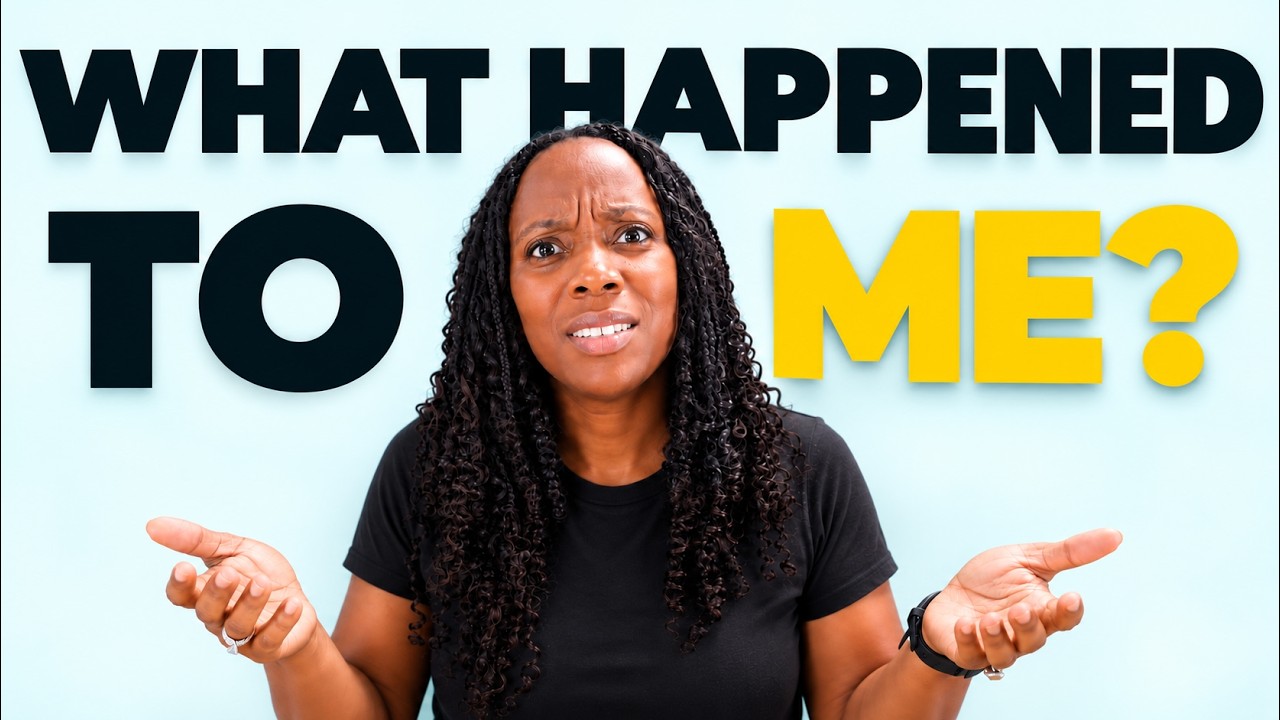
Why do I feel like I have no personality? Maybe you’re sitting with people you actually want to talk to, with a joke you’ve been ready to say, and nothing comes out. Instead, you nod, you smile and you give a short answer. By the time you get home, you’re replaying everything you could have said.
The worst part isn’t the awkward silence. It’s knowing the people in that room are leaving with an impression of you that doesn’t feel like you at all. After enough years of that, you start wondering if this actually is your personality now.
Often it isn’t that you have no personality; fear is deciding how much of it people get to see. What if you’ve been judging your personality by the version of you that’s trying the hardest not to be judged? This post comes from Episode 85 of Block Out the Noise. It walks through the gap between everything going on inside your head and how little of it other people get to see, why that gap happens (with research to back it up), and how to start closing it without forcing yourself to become louder, more outgoing or someone you can’t recognize.
Watch or listen to this episode
Why holding back makes so much sense
Holding back makes sense when speaking feels risky. If you’re worried that what you say could sound stupid, boring, awkward, rude, too much or not enough, saying less gives you less to be judged for.
If I don’t tell the joke, nobody can think it’s stupid. If I don’t give my opinion, nobody can disagree with me. If I don’t tell you much about myself, there’s less of me for you to reject. That’s protection.
This fits how social anxiety works. The National Institute of Mental Health describes social anxiety as anxiety or fear in situations where you may be scrutinized, evaluated or judged by others. When your brain treats a dinner table like an evaluation, it makes sense that it tries to give the judges as little as possible.
The same NIMH guide makes a point that matters for this whole post: avoiding the situations that cause anxiety may feel helpful in the short term, but the anxiety is likely to stick around without treatment. Holding back can work the same way. It brings quick relief, and it can keep the fear in charge.
Trying to talk while reviewing your own performance
Someone is telling you a story, and you’re trying to listen while thinking, am I making enough eye contact? Now you’re forcing it. Wait, is it too much? Great, now you’re manually operating your eyeballs.
They pause, and it’s your turn. You spent the last 30 seconds monitoring your face, your hands and your voice, so you missed half of what they said. You go with the safest response you’ve got: “Yeah, that’s right.” You have no idea what you just agreed to.
That’s what self-focused attention can feel like. You’re trying to have a conversation while reviewing your performance in that conversation at the same time:
- How does my voice sound?
- Was that weird?
- Am I talking too much?
- What is my face doing?
- They looked away. Did I lose them?
You’re supposed to do all of that while listening, laughing and connecting with another person. That’s a lot of jobs for one conversation, and it leaves very little of you available for the conversation itself.
What are social anxiety safety behaviors?
When the job feels that big, of course you start finding ways to make it easier. Those ways are what researchers call safety behaviors. Here’s what they can look like in everyday life:
- Rehearsing: you practice a sentence before you say it, and by the time you’ve approved it, everyone has moved on to three other topics.
- Agreeing: you go along with the group instead of giving your actual opinion.
- Keeping it short: you give quick answers so there’s less to judge.
- Planning ahead: you script what you’re going to say before you walk into the room.
- Hiding the nerves: you spend so much energy trying not to look anxious that you barely get to take part.
Two kinds of safety behaviors
A 2019 study in PLOS ONE sorted safety behaviors into two groups. Avoidance safety behaviors pull you out of the interaction, like talking less, avoiding asking questions, keeping still or staying on the edges of a group. Impression management safety behaviors are about controlling how you come across, like checking that you’re coming across well or trying to picture how you look to others.
| Avoidance type | Impression management type |
|---|---|
| Talking less or keeping still | Checking that you’re coming across well |
| Avoiding asking questions or staying on the edges of a group | Picturing how you look to others |
In an experiment from that PLOS ONE study, where students were asked to use these habits in a conversation, both types increased anxiety in the person using them. The avoidance type also had broader effects on the other person in the conversation. So the habits meant to keep you safe can keep you anxious, and some of them change how the conversation feels for the other person too.
If speaking feels dangerous, control feels safer, so these habits make sense. The problem is that you can get really good at controlling yourself without getting any better at letting people know you. Quietly, the goal becomes don’t be awkward, don’t say anything stupid, don’t let them see you’re nervous. Be yourself, but not enough of yourself that somebody could have an opinion about it.
Why do I feel like I have no personality?
Let me answer the question underneath all of this directly.
Social anxiety has not proven that you lost your personality
Jessica Davis, Block Out the Noise Episode 85
It may be limiting how much of your personality you feel safe expressing. Those aren’t the same thing. One is about who you are. The other is about how much of who you are gets past the fear.
Why can I only be myself around certain people?
Think about who you are around somebody you feel completely safe with. Maybe you talk more. Maybe you’re funnier. Maybe you disagree without spending the next four hours wondering if they’re secretly mad at you.
You get excited about things. You tell the full version of the story. You make the joke before your brain has time to send it through legal. That person is you too.
With a safe person, there’s less to protect, so there’s less reason to run the performance review. All the attention that was going to monitoring yourself is free again for laughing, reacting and saying what you think. Your personality didn’t go anywhere. It just had room.
This doesn’t mean everybody with social anxiety is secretly an extrovert. You might truly be quiet or need a lot of time alone. The more important question is how much fear gets to decide what other people know about you.
Why am I so quiet in social situations?
Imagine you go to dinner with a group. You have things to say, but most of them stay in your head. Someone asks about your weekend, and you say, “Not much.” You think of something funny, but you don’t say it.
Then somebody says, “You’re so quiet.” Inside you’re thinking, I’m not. You should have heard the joke I almost said 10 minutes ago.
You can’t completely blame them, though. They’re describing the person they’ve experienced. They didn’t hear the opinions or the story you decided halfway through was too boring to share.
They only have access to what you let through. They meet the version of you that feels safest to show them.
Jessica Davis, Block Out the Noise Episode 85
Research backs this up. In a 2022 study where people had get-to-know-you conversations with a trained conversation partner, those partners rated people with social anxiety disorder as less likeable and less authentic, and the people with social anxiety disorder rated themselves as less authentic too. The researchers found that the difference in likeability was linked to inhibiting or restricting safety behaviors, the holding back itself.
That’s important news. It means the impression people walk away with is shaped by how much of you they got to see. It’s not a verdict on the whole you.
When their description becomes yours
If that happens enough, their description of you slowly becomes your description of you. I’m quiet. I’m boring. This is just who I am.
That’s a much heavier conclusion than “I hold back when I feel anxious.” Now you’re not describing something you do. You’re treating those moments as evidence about who you are.
Here’s the loop. You hold back, people get less of you, and they respond to the version they got. Your brain says “See?” and the next time you monitor yourself even more.
If this loop feels familiar, you might also like why anxiety keeps you stuck and how to break free.
Where the loop shows up in real life
It doesn’t just happen at dinner. It can show up almost anywhere:
- At work: you watch somebody else say the thing you were thinking 10 minutes ago, and everyone goes, “That’s a great idea.”
- On a date: every answer becomes the safest answer possible, while the other person may spend 90 minutes trying to figure out whether you even liked them.
- On the phone: you call about a problem with a bill, hear the slightest pushback and say, “Okay, no worries.” There were worries. That’s why you called.
- In a relationship: “Where do you want to eat?” “I don’t care.” Then you wonder why they don’t know what you need.
The deepest cost isn’t the awkward conversations. It’s what happens privately when you keep seeing an edited version of yourself reflected back at you. In every one of these places, the practice in the rest of this post is the same: let one small, real piece of you through.
Practice being known, starting with getting out of the mirror
So how do you change this without turning every conversation into another performance? I don’t want you to think of it as learning to be more social. I want you to think of it as practicing being known.
That starts with getting out of the mirror. Next time you’re talking with someone, notice where your attention is. Are you listening to them, or are you listening to yourself listening to them? That’s the mirror.
You won’t magically stop thinking about yourself, and that’s not the goal. You’re giving some of your attention somewhere else to go.
In a 2017 video chat study, women with higher social anxiety were less self-focused than women with lower social anxiety during the part of the conversation when they were told to ask the other person questions. That doesn’t mean questions fix social anxiety. It means it’s harder to study yourself so intensely when some of your attention is on the person in front of you.
Here’s one way to practice it in your next conversation:
- Notice the mirror. When you catch yourself checking your face, voice or posture, name it quietly: there’s the mirror.
- Pick one thing they care about. If they light up about a new job, a trip or a very specific hobby you know nothing about, that’s your thread.
- Get curious about it. Ask what they loved about the trip, or how they got into the hobby.
- Come back gently. Your attention will drift back to yourself. That’s normal. Each time it does, return to their story without scolding yourself.
When asking questions becomes another way to hide
Here’s the catch. Asking questions can also become a fantastic way to hide.
Some of you are already great at this. You know where people grew up, what they do for work and their vacation plans. You could probably tell me what their dog is allergic to. They know you also have a job.
If that’s you, asking more questions isn’t your next move. You need to give them something to know. When the conversation comes back to you, practice not closing the door right away:
| Closing the door | Giving one thing |
|---|---|
| “Nothing much.” | One real thing you did this weekend |
| “I don’t care, whatever you guys want.” | One actual preference |
| Deleting the joke in your head | Trying the joke out loud |
| “Either one is fine.” | What you actually think, in one sentence |
The goal isn’t to become vulnerable with everyone you meet. You’re giving another person one small piece of you that they can actually know.
How to make one hidden thing slightly more visible
Now notice what you usually hide, because this is where the practice becomes yours. For one person, smiling at somebody is a real step. For someone else, saying hi is easy, but giving an opinion in a meeting is hard.
Use these steps to build your own small experiment:
- Name what you hide. Maybe it’s telling a story without rehearsing every sentence first, not deleting the joke before you hit send, correcting your order when it comes out wrong, or telling your partner which restaurant you actually want instead of making them guess for the 17th time.
- Make it slightly more visible. Just slightly. Not your deepest, darkest secret shared with Steve from accounting.
- Keep it small enough to repeat. One opinion in one meeting counts. Small steps you can practice beat one big leap you avoid.
- Let the possibilities exist. Sometimes people won’t laugh, and sometimes you’ll wish you could take it back. Welcome to being a person.
- Notice what actually happened. Not what your brain predicted, but what really happened in the room.
The skill is letting those possibilities exist without automatically deciding the safest version of you is the only one people get to meet. If you like having a plan to follow, the free 90-Day Courage Challenge cheat sheet can help you set small, realistic goals and keep going.
If it feels weird at first
If you’ve spent years being the quiet one, giving an opinion can feel unnatural. You say one thing in a meeting, and your brain schedules a post-game review for 11:30 at night.
Different doesn’t automatically mean fake. Uncomfortable doesn’t automatically mean wrong. Sometimes it just means unfamiliar.
Jessica Davis, Block Out the Noise Episode 85
Being quiet is fine, and getting support is too
Being quiet isn’t a problem. Being introverted isn’t a problem. Wanting a small circle is completely fine. The question is whether you’re choosing how you show up, or whether fear has been making that choice for you.
If fear of being judged is getting in the way of your work, your relationships or the life you want, you don’t have to sort it out alone. NIMH notes that cognitive behavioral therapy (CBT) is a well-studied, research-supported therapy commonly used for social anxiety, and it suggests talking with a health care provider if you think you’re dealing with it.
Next time you notice yourself editing something away, ask yourself one question: what’s one piece of me I could let through right now? Then let that be enough. If second-guessing yourself is part of this for you, read how to feel confident even when you’re second-guessing yourself, or grab the free Anxiety Survival Toolkit.
Hear the whole episode about getting your personality back
In the full episode, I walk through getting out of the mirror, how asking questions can become a way to hide and the small experiments in my own words, with a few detours involving Steve from accounting. You get to be quiet if quiet is who you are, and you deserve the chance to find out who you are when fear isn’t making every decision.
Questions people ask about feeling like you have no personality
Quick reminder: Block Out the Noise is here to support and guide you, but it is not a replacement for talking to someone in real life. If you’re struggling with your mental health, please reach out to a therapist. If you’re in crisis, contact emergency services or a local helpline. You don’t have to go through it alone.